AI Coding Agents: Claude Code vs Cursor vs Codex vs Copilot vs Aider
If you code in 2026, your AI assistant choice matters more than your editor choice. Five tools dominate the market today — Claude Code, Cursor, Codex, GitHub Copilot, and Aider — and their philosophies are radically different. This guide compares their strengths, weaknesses, pricing, and gives you a clear framework to pick the right tool for your workflow.
Note: this comparison was written from real-world use of all five tools in production on Next.js, Python, and Go projects. Opinions come from practical experience, not marketing pages.
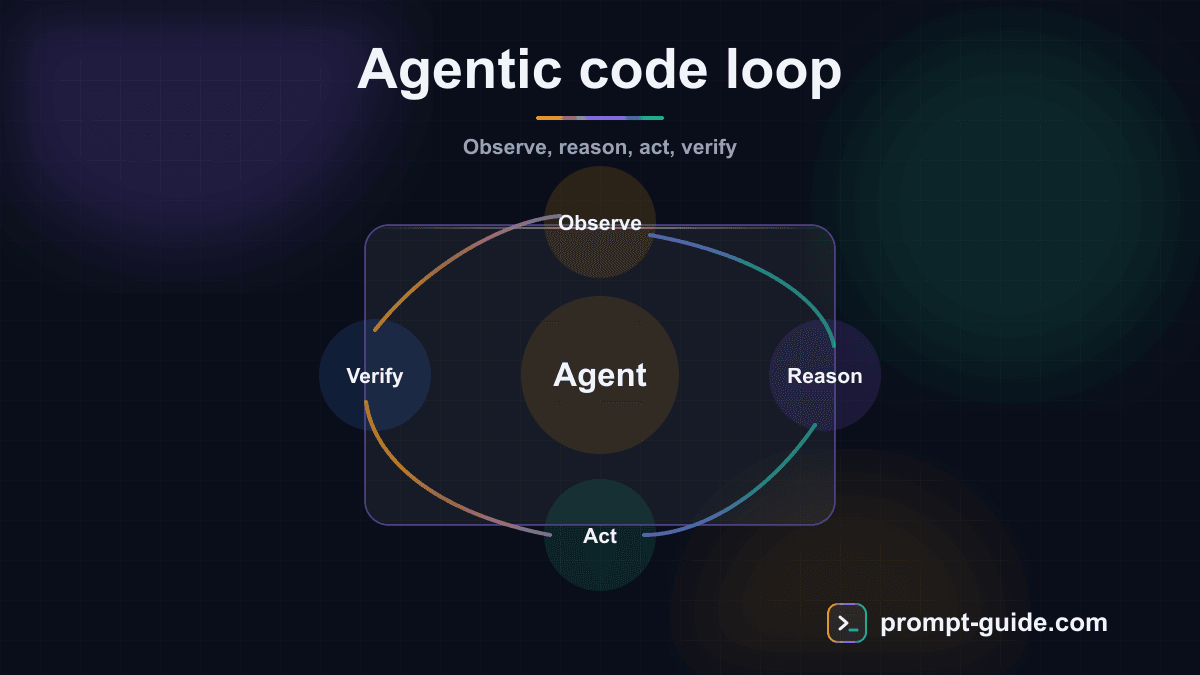
Quick comparison summary
Before the details, here's a rapid recap of the five tools on the criteria that matter most:
- Claude Code — Anthropic CLI agent, for autonomous complex multi-file tasks
- Cursor — dedicated editor (VS Code fork), for fast edits and contextual autocomplete
- Codex — OpenAI agent, direct equivalent of Claude Code, integrated with ChatGPT
- GitHub Copilot — IDE extension, the historical one, focused on real-time autocomplete
- Aider — open-source CLI tool, for full control and using open-weight models
Claude Code (Anthropic)
Claude Code is Anthropic's official CLI agent, released in 2025. Its trait: it's an autonomous agent, not an assistant. It receives a goal and pursues it to completion by orchestrating tools (file read / write, command execution, MCP, sub-agents).
Strengths
- Superior reasoning on complex tasks (Opus 4.7), clearly above competition for structural refactors
- Native multi-agent: can spawn 4-8 parallel sub-agents, massive productivity gains
- Native MCP: direct connection to Notion, GitHub, your DB, no custom integration
- Hooks and automation: trigger before commit, after tests, etc.
- CLAUDE.md: ultra-powerful project context file to customize behavior
Weaknesses
- No direct visual feedback: for precise UI / CSS work, the lack of feedback hurts
- Limited by model context on very large monorepos (>500K lines)
- High cost in heavy usage (Max plan at $100-200/month becomes necessary)
Pricing
Pro at $20/month (moderate usage), Max at $100-200/month tiers (heavy daily usage). API usable separately, billed per token.
Best for
Senior developers and tech leads wanting to delegate complex tasks. Multi-file refactors, migrations, code audit, test generation on legacy. Agencies and startups needing reasoning quality on architecture.
Cursor (Anysphere)
Cursor is a dedicated editor, fork of VS Code, with AI integrated end-to-end. Launched in 2023 by Anysphere, it became in 2025-2026 a standard among developers coding daily with AI.
Strengths
- Tab-Tab autocomplete contextual across the whole repo, unmatched fluidity
- Cmd-K: fast inline edit of a block via natural instruction
- Composer: multi-file agent mode in editor, with live preview
- Model choice: Claude, GPT, Gemini per preference or task
- Frictionless migration from VS Code (imports existing config)
Weaknesses
- Standalone application: you must leave your current editor
- Cmd-K and Composer faster but less powerful than Claude Code on long tasks
- No CLI / batch agent mode: everything goes through the GUI
Pricing
Limited free plan (autocomplete + basic chat), Pro at $20/month (top-tier models + Composer + Bug Bot), Business for teams.
Best for
Full-time developers spending their days in the editor wanting an integrated tool. Particularly effective for frontend, app code, and any work where direct visual feedback helps.
Codex (OpenAI)
Codex is OpenAI's autonomous coding agent, direct equivalent of Claude Code but integrated with the ChatGPT ecosystem. The Codex name was reused in 2025 (originally a 2021 model) to position the product against Claude Code.
Strengths
- ChatGPT integration: if you already use the OpenAI ecosystem (Custom GPTs, Pro plan), Codex is native
- GPT-5 models: quality reasoning, large context
- Mature CLI and API: integration into CI pipelines or automation scripts
- Multi-file agent mode with safeguards (plan mode equivalent)
Weaknesses
- MCP ecosystem still partial on the OpenAI side in 2026 (vs Claude which created the protocol)
- Less effective than Claude on very complex reasoning tasks per several benchmarks
- Younger documentation and community than Claude Code
Pricing
Included in ChatGPT Pro ($20/month) and ChatGPT Business. API per token. No dedicated free Codex plan.
Best for
Teams already invested in the OpenAI ecosystem. Devs wanting to compare Anthropic and OpenAI approaches before committing. Use cases where Custom GPT + Codex integration brings specific business value.
GitHub Copilot
GitHub Copilot is the historical one: launched in 2021, originally powered by OpenAI's Codex model, it democratized AI autocomplete. In 2026, Copilot has evolved well beyond simple autocomplete but remains primarily positioned on that use case in the editor.
Strengths
- IDE integration mature in VS Code, JetBrains, Visual Studio, Vim, Neovim
- Copilot Chat: contextual conversations in the editor, simplified equivalent of Cursor chat
- Copilot Agent Mode (2025): multi-file tasks, catching up to Cursor / Claude Code
- Massive distribution: available across all editors, native GitHub integration
- Robust enterprise plan with compliance controls and audit
Weaknesses
- Agent mode less mature than Claude Code and Cursor in 2026
- Less flexible model choice than Cursor (mainly tied to OpenAI, gradual opening to Claude)
- Fewer native task chaining features
Pricing
Free for students and OSS, Individual at $10/month, Business at $19/user/month, Enterprise at $39/user/month.
Best for
Developers not wanting to change editor. Teams in enterprise environments (compliance, SSO, audit). First choice for those starting AI-assisted coding without disrupting their setup.
Aider
Aider is the open-source outsider. CLI tool actively maintained by Paul Gauthier, Aider lets you use any model (Claude, GPT, Gemini, Llama, Qwen) with full control over context and editing strategy.
Strengths
- 100% open-source and auditable: code available, active community
- Full model choice: Claude, GPT, Gemini, plus open-weight models (Llama, Qwen, DeepSeek)
- Self-hostable: can run with a local model for strict-confidentiality environments
- Advanced editing strategies (whole-file, diff, search-replace) rivaling commercial offerings
- Flexible cost: you pay the API you use, not a fixed subscription
Weaknesses
- More technical setup than competition (terminal, git, configuration)
- No editor autocomplete, no rich GUI
- Less fluid than Claude Code on highly autonomous tasks
Pricing
Free tool. You only pay the API of the model used (Anthropic, OpenAI, OpenRouter, or your own local model).
Best for
Developers wanting full control: model choice, local hosting, complete transparency. Regulated environments (health, defense, finance) where code can't leave to commercial cloud APIs. Devs wanting to experiment with various open-weight models.
Numerical comparison on key criteria
Interaction mode
- Claude Code: CLI + VS Code extension + desktop app
- Cursor: standalone editor (VS Code fork)
- Codex: ChatGPT (web) + CLI + VS Code extension
- Copilot: extension in VS Code, JetBrains, Visual Studio, Vim
- Aider: CLI only
Agent capability (autonomous multi-file)
- ★★★★★ Claude Code (multi-agent, hooks, native MCP)
- ★★★★☆ Cursor (multi-file Composer, but more interactive)
- ★★★★☆ Codex (CC equivalent on paper, younger ecosystem)
- ★★★☆☆ Copilot Agent (catching up in 2026)
- ★★★☆☆ Aider (capable but requires more configuration)
In-editor speed (autocomplete + edit)
- ★★★★★ Cursor (most fluid Tab-Tab on the market)
- ★★★★☆ Copilot (mature and ubiquitous)
- ★★★☆☆ Claude Code (VS Code extension, less fluid than Cursor)
- ★★★☆☆ Codex (VS Code extension)
- ★★☆☆☆ Aider (no autocomplete, CLI focus)
Monthly price for solo intensive use
- Claude Code Max: $100-200/month
- Claude Code Pro: $20/month (sufficient for moderate use)
- Cursor Pro: $20/month
- Codex (ChatGPT Pro): $20/month
- Copilot Individual: $10/month
- Aider: $0 + per-token API cost (highly variable based on model used)
Which tool to pick: decision guide
The right choice depends mainly on your situation and priorities. Here's a simple framework.
If you're starting with AI-assisted coding and want minimal friction
→ GitHub Copilot. Plug into your current editor, accessible pricing, and you get 80% of the value without changing habits.
If you code in editor all day and want the best integrated UX
→ Cursor. Tab-Tab and Composer make it the most fluid tool for in-editor edit / refactor.
If you want to delegate complex tasks and work in agent mode
→ Claude Code. Superior reasoning and the MCP / hooks ecosystem make it the most powerful tool for autonomous missions.
If you're already invested in the OpenAI ecosystem
→ Codex. Native integration with ChatGPT, Custom GPTs, and the entire OpenAI tooling.
If you need full control and / or open-weight models
→ Aider. Open-source, self-hostable, full model choice.
Tip: don't feel obligated to pick a single tool. The most effective combination in 2026 for full-time developers remains Cursor + Claude Code: Cursor for active in-editor editing, Claude Code for background agentic tasks. Combined cost ($40/month) remains far below a junior dev for one day per month.
Going further
Once your choice is made, these resources will help you exploit each tool to its full potential:
- Complete Claude Code guide — install, commands, use cases
- MCP (Model Context Protocol) — to plug your external tools into Claude Code
- Claude Skills — package your recurring workflows
- Cursor (glossary entry)
- Codex OpenAI (glossary entry)
Frequently Asked Questions
Which is the best AI coding agent in 2026?
There is no single winner. For autonomous complex tasks, Claude Code dominates thanks to Opus 4.7 reasoning and native MCP support. For fast in-editor editing, Cursor is more fluid. Many developers combine both for 80% of the time.
Claude Code vs Cursor: which to pick?
They're complementary tools, not direct competitors. Cursor is an editor (in-editor interaction, autocomplete, chat). Claude Code is a CLI agent (autonomous tasks, multi-agent, hooks). If you code 8h/day in editor, get Cursor first. If you want to delegate long tasks, get Claude Code first.
Does Codex replace Claude Code?
No, they're competing tools covering the same territory. The choice depends on your ecosystem: if you're already on ChatGPT Pro with Custom GPTs, Codex is native. If you want the best reasoning on complex tasks, Claude Code remains preferred by power users in 2026.
Is GitHub Copilot outdated?
No. Copilot remains the most accessible ($10/month, mature IDE integration). Its Agent mode is gradually catching up to Cursor and Claude Code in 2026. For teams in enterprise environments (compliance, SSO), it's often the best compromise.
Is Aider relevant against commercial tools?
Yes, in two cases: if you want full control (model choice, self-hosting) or if you work in an environment that can't send code to commercial cloud APIs (health, defense, regulated finance). For the general public, commercial tools remain more fluid.
Should I drop GitHub Copilot for Claude Code?
Not necessarily. Copilot remains excellent for real-time autocomplete during typing, which Claude Code doesn't do. Many keep Copilot for in-editor editing and use Claude Code as a complement for background agentic tasks.
How much does a well-optimized AI agent stack cost in 2026?
The Cursor Pro + Claude Code Pro combination runs $40/month for a solo developer. It's amortized as soon as these tools save you 1-2 hours per month. For very heavy use (40h/week of AI-assisted coding), the Claude Max plan ($100-200/month) becomes relevant.
Related Prompts
System prompt of an autonomous AI agent: identity, tools and guardrails
Generates a complete, portable system prompt for a tool-using AI agent: mission, scope, per-tool rules, three autonomy levels, security, doubt handling, report format.
Write a project's CLAUDE.md: the brief Claude Code reads at every session
Turns your project description into a dense CLAUDE.md: commands, structure, conventions, pitfalls, off-limits areas and situations where the agent must ask before acting.
AGENTS.md for OpenClaw: operating rules and security guardrails
Writes a complete AGENTS.md for OpenClaw: work loop, per-channel routing, three action levels, sensitive data, prompt-injection defence, heartbeat and log.
Hermes Agent personality file: a daily-watch assistant
Writes in one go the personality file of a Hermes Agent dedicated to monitoring: identity, tone, mission, digest format, memory rules and hard limits.
Task brief for Claude Code: frame a feature end to end
Brief template to delegate a complete feature to Claude Code: goal, starting point, constraints, definition of done, working rules and recap format.
Practice Exercises
Related guides
Continue your learning
You've finished this guide. Here's how to go further.
Practice what you learned
Interactive exercises to sharpen your prompting skills
Get new guides every week
Join our newsletter and never miss new content.